ROSEHIP OIL
Prized since ancient times for its valuable healing benefits, rosehip oil is loaded with skin nourishing vitamins and essential fatty acids. It also contains phenols that have been shown to have antiviral, antibacterial, and antifungal properties.
It hydrates: Rosehip oil contains a wealth of essential fatty acids, including linoleic and linolenic acid. Fatty acids help keep cell walls strong so they don’t lose water. The many fatty acids in rosehip oil make it an excellent option for hydrating dry, itchy skin. The skin also easily absorbs the oil, allowing its antioxidants to travel deep into the skin’s layers.
It moisturizes: Moisturizing helps lock in your skin’s natural hydration and any added oils.
A 2015 study using rosehip powder suggested that rosehips offer several anti-aging properties, including the ability to keep skin moisturized. Researchers found that participants who took rosehip powder orally experienced noticeable improvements in their skin’s overall moisture.
You may also receive these benefits by applying rosehip oil topically. Rosehip oil is a dry, or nongreasy, oil. This makes it a great natural moisturizer for all skin types.
It helps exfoliate and brighten skin
Natural exfoliation with rosehip oil can help reduce dullness and leave you with glowing, vibrant skin. The vitamin A, or retinol, in rosehip oil encourages skin cell turnover.
It helps boost collagen formation: Collagen is the building block of skin. It’s essential for skin elasticity and firmness. Your body naturally makes less collagen as you age. Rosehip oil is rich in vitamin A which is necessary for the production of collagen. Rosehip has also been shown to inhibit the creation of MMP-1, an enzyme that breaks down collagen in the body.
Research supports these benefits, too. In a 2015 study, researchers found that participants who took rosehip powder orally experienced a noticeable increase in skin elasticity.
It helps reduce inflammation: Rosehip is rich in both polyphenols and anthocyanin, which may help reduce inflammation. It also contains vitamin E, an antioxidant known for its anti-inflammatory effects.
With this in mind, rosehip oil may help calm irritation resulting from: rosacea, psoriasis, eczema, dermatitis.
6. It helps protect against sun damage
Cumulative damage from a lifetime of exposure to the sun plays a major role in premature aging. Ultraviolet (UV) exposure can also interfere with the body’s ability to produce collagen.
Rosehip oil contains antioxidants like vitamins A and E. These vitamins have been shown to synergistically combat visible sun damage. They may also help prevent photoaging. With this in mind, rosehip oil may be used to help reduce the negative effects of UV exposure. But it shouldn’t be used in place of sunscreen.
It helps reduce hyperpigmentation: Hyperpigmentation occurs when excess melanin forms dark spots or patches on the skin. This can result from a number of factors, including: sun exposure, hormonal changes, such as with pregnancy or menopause, certain medications, including birth control pills and chemotherapy drugs.
Rosehip oil is rich in vitamin A. Vitamin A is made up of several nutritional compounds, including retinoids. Retinoids are known for their ability to reduce hyperpigmentation and other visible signs of aging with regular use.
Rosehip oil also contains both lycopene and beta carotene. These ingredients are said to haveTrusted Source skin-lightening properties, making them staple ingredients in many skin-lightening products.
Animal studies indicate that rosehip extract contains melanin-reducing propertiesand may warrant further study for its use on humans.
It helps reduce scars and fine lines
Rosehip oil is rich in essential fatty acids and antioxidants, which are integral for tissue and cell regeneration in the skin. It’s no wonder the oil has long been used as a remedy for wound healing, as well as the reduction of scars and fine lines.
One 2015 study on rosehip powder showed a significant reduction in the appearance of fine lines around the eyes, also known as crow’s feet, after 8 weeks of treatment. Participants in this study consumed the powder orally.
In a separate 2015 study, participants with post-surgical scars treated their incision site twice per day with topical rosehip oil.
After 12 weeks of use, the group using rosehip oil experienced significant improvements in scar color and inflammation when compared with the group who received no topical treatment.
It helps boost immunity: Rosehip oil is rich in antioxidants and polyunsaturated fatty acids, like linoleic acid, which are imperative for preventing the breakdown of cell membranes in the skin. Strong, healthy cells act as a barrier to prevent bacteria from invading the skin, which can lead to outbreaks and infections.
In both animal and human studies, rosehip powder has been shown to bolster the strength and longevity of the skin’s cells. Rosehip powder was also shownTrusted Source to reduce the production of MMP-1, an enzyme that breaks down cell structures like collagen.
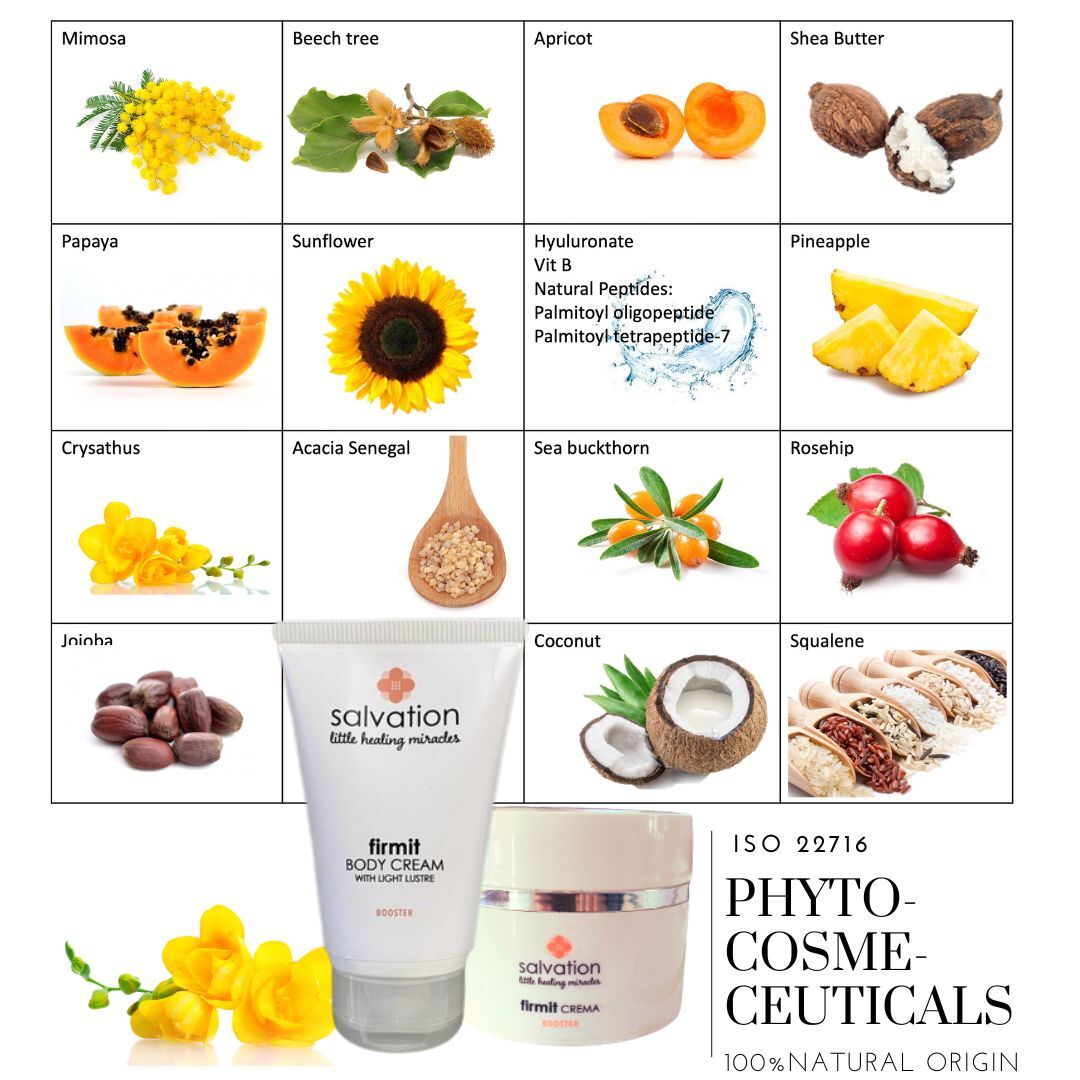
SEA BUCKTHORN
Sea buckthorn oil is rich in various vitamins and minerals, as well as antioxidants and other plant compounds that may support your health.
Sea buckthorn oil may help your skin heal from wounds and burns more quickly. It may also improve acne, eczema, and psoriasis, although more research is needed.
Sea buckthorn oil is rich in beneficial plant compounds like flavonoids and antioxidants, which may help your body fight infections.
Sea buckthorn oil provides certain plant compounds that may protect against cancer.
May treat dry eyes. One study linked daily sea buckthorn intake to reduced eye redness and burning.
May improve the appearance of hair. Sea buckthorn contains small amounts of lecithin, a type of fat that may remove excess oil from your hair. It may also help repair damaged hair and restore its elasticity.
PENTAPEPTIDE-48
In this study, peptides complex stimulating skin basement membrane proteins expression was developed and the anti-wrinkle benefits of the peptides complex was investigated in vitro and ex vivo. Clinical efficacy of peptide complex as anti-wrinkle cosmetic ingredient was also confirmed.
Study and results available on request:
Peptides used are encapsulation to become Biologically-Active: The stratum corneum is poorly permeable to hydrophilic
and high molecular weight compounds such as peptides. Consequently, the pentapeptide was incorporated
into a soft sphere carrier system
based on shea butter in order to:
• increase its penetration into the skin
• enhance its uptake by keratinocytes
• enable a controlled-release delivery
• protect the peptide molecules in the formulation against degradation.
RoyalEpigen P5 peptide complex: (royal jelly taken to the next level)
• Reveals a more even toned skin
• Accelerates epidermal regeneration for a smooth skin
• Activates the cellular cleaning process
• Delays cell aging by applying new discoveries in epigenetic sciences